2026: the year mental health finally becomes a strategic management issue
One Monday in January 2026, the HR director of a large industrial group emerges exhausted from a management committee meeting. At one of its sites, everything seems to be falling apart: repeated sick leave, constant irritability among the teams, rumors of departures circulating behind closed doors, a manager who is hanging on but whose energy is hanging by a thread. Senior management, concerned about the operational impact, is questioning the rising costs and repeated delays.
She sighs, puts down her pen, and says to me: "I've been raising the alarm for three years. This year, for the first time, they understood that this wasn't a social issue, but a strategic one."
We have entered a new world. In 2026, mental health is no longer a matter of comfort, internal communication, or a secondary aspect of the QVCT plan. It has become a direct lever for efficiency, business continuity, attractiveness, and collective performance. While governance is discovering what HR has long observed—the intensification of work, silent burnout, managerial fragility, and relational tensions—the HR function is finally moving beyond its role as a warning system to become a key player in organizational resilience. Here are the ten trends that are profoundly redefining the work of HR and QWL managers in 2026.
1. Mental health is becoming a cornerstone of corporate management
The subject has changed in scale. Whereas yesterday we talked about well-being, today we talk about sustainable performance, major social risks, loyalty, and even business protection. Leaders now understand that an unstable social climate can cost millions, that a weakened manager can drag an entire department down with them, and that high turnover always says something about the organization itself.
For HR, this means that their recommendations are incorporated into decisions at an earlier stage. Human indicators are gaining in importance. Meetings that used to focus solely on finance, production, or sales now also include elements such as the social climate, managerial risk, and the teams' actual capacity to take on a new project.
It is a quiet but profound transformation: HR no longer "manages," it guides.
2. Support systems are becoming hybrid, flexible, and finally being used
For a long time, wellness programs were designed to exist, not to work. In 2026, we are shifting towards truly accessible solutions: rapid on-site interventions after a shock, video calls available on the go, short workshops integrated into daily life, formats adapted to shift work or dispersed teams.
HR understands that no two departments face the same constraints. A workshop designed for headquarters will never affect teams working staggered hours. A digital tool can be powerful for one group of employees, but a hindrance for another. Hybridization finally enables real-world use, which often increases dramatically. In practice, employees consult more easily, managers provide guidance earlier, and everyday tensions are significantly reduced.
3. Hyper-personalization is becoming essential, but must be ethically regulated
Digital tools andAI enrich HR analysis. They detect weak signals that were previously invisible: peaks in mental load, risks of departure, emerging tensions, or managerial fragility. But HR knows one essential thing: numbers show variations, not human realities. Two teams with the same mental load score never experience the same story.
The challenge for 2026 is therefore to move towards highly personalized approaches, but without ever crossing the line. HR departments, which are always responsible for ensuring confidentiality, verify that data is being used appropriately and interpreted in context. Data is no longer considered to be the absolute truth: it has become a starting point, and only HR departments are capable of turning it into useful insights.
4. PSR prevention becomes active, operational, and integrated
Prevention is finally moving beyond rigid procedures. It is becoming a living mechanism. Internal investigations are no longer seen as punishments but as regulatory tools. Crisis units are activated within hours. Managers are trained before crises arise, not after the damage has been done.
HR knows how to identify the early signs: recurring friction, growing irritability, employees withdrawing, managers hiding their fatigue behind platitudes. In 2026, they finally have the means to intervene earlier, faster, and more effectively.
Prevention is no longer a document: it is an organizational reflex.
5. Flexibility becomes a lever for mental health, provided it is equitable
Teleworking is no longer a topic of debate. The question has become: how can we make flexibility fair? Because poorly thought-out flexibility weakens teams: those in jobs that cannot be done remotely sometimes feel a sense of injustice. Managers no longer know how to manage dispersed teams. Employees are more clearly asserting their limits and needs.
In 2026, flexibility will shift from a "case-by-case" approach to a coherent, structured, and shared social policy. Clarity will become a factor in mental health. A fair flexibility policy will ease tensions, rebalance perceptions, and restore cohesion.
6. Managers become the primary barometer of the social climate
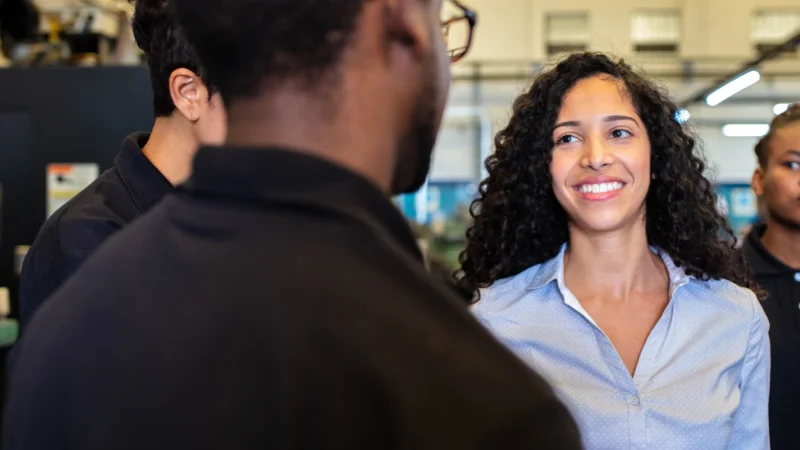
Managerial burnout is becoming one of the most critical risks. Managers bear the brunt of everything: targets, operational responsibilities, interpersonal tensions, team emotions, and even orders from above. And many of them refuse to admit that they are struggling.
In 2026, HR departments will set up specific support spaces, peer-to-peer regulation periods, and dedicated listening mechanisms. Managers will no longer be mere regulators: they will become resources to be protected. When a manager stands tall, the whole team stands tall with them.
7. Recognition is once again becoming a major driver of motivation.
HR professionals see it every day: it's not the workload that wears people down first... but the feeling that this workload is invisible. In 2026, recognition will once again become a strategic lever. Companies will start to value discreet efforts, essential but unrecognized tasks, and actions that keep a team united without ever appearing in a report.
A simple weekly ritual where we recognize a particular effort can transform the dynamic. Recognition is no longer an extra: it becomes a pillar of retention and motivation once again.
8. HR technology becomes an advantage, provided that it reduces cognitive load
HR tools have multiplied to the point of overwhelming teams. In 2026, HR will become the guardians of digital sobriety. They will select, simplify, and unify processes to reduce unnecessary notifications, duplication, and energy loss associated with technological dispersion.
Mental health also depends on clarity: fewer tools, better integrated, better mastered. When information flows freely, tensions naturally decrease.
9. Emotional regulation spaces become operational tools
There has been a clear shift: employees no longer just come to ask for help after a shock, but also seek to prevent emotional outbursts. Ten minutes of breathing space, a confidential space to discuss concerns, a moment to refocus before a difficult meeting... these practices stabilize the social climate.
When well designed, these spaces become powerful shock absorbers. They prevent everyday tensions from turning into conflicts. They restore calm to overwhelmed organizations.
10. Assertiveness is becoming essential and redefining working relationships.
Employees are more vocal about their limitations and needs. They question inconsistencies, refuse contradictory orders, and demand greater transparency. This can destabilize organizations accustomed to more hierarchical exchanges.
But this change also represents an opportunity: expectations are clarified more quickly, unspoken issues are reduced, and relationships become more professional and healthier. HR plays the role of mediator and architect of these new spaces for dialogue.
Summary: HR/QWL priorities in 2026
The year 2026 marks a turning point. HR departments must now consider mental health as a strategic management priority. This means protecting managers before they burn out, professionalizing prevention, and promoting flexibility. It also means making recognition tangible and structuring emotional spaces adapted to current changes in the workplace.
HR/QWL managers are becoming the architects of sustainable work
In 2026, the HR/QVCT function will undergo a profound transformation. It will no longer be content to manage crises: it will anticipate them. It will no longer be a spectator to decisions: it will inform them. It will no longer repair damage after the fact: it will build the conditions for an organization capable of remaining effective even under pressure.
Mental health is becoming a strategic asset. HR/QWL managers are becoming the guardians of this asset. And companies are finally understanding that their performance depends first and foremost on the actual health of their teams.
Would you like support in making mental health a priority for 2026 within your organization? Contact us.