Serious workplace accidents, deaths, suicide attempts, assaults, or traumatic events: implement a structured psychological support program to protect your employees, mitigate the impact, and support your organization.
When a serious incident occurs within an organization, the consequences are never limited to the moment of crisis.
Workplace accidents, the death of an employee, suicide attempts, violence, traumatic events, or critical situations: the company must be able to respond quickly, methodically, and within a secure framework.
Pros-Consulte helps you establish an in-house psychological support team to assist affected employees, mitigate the initial shock, and support teams in dealing with both the immediate and long-term aftermath of the event.


In many organizations, critical situations continue to be managed in a rush, without a truly structured framework. HR must respond immediately. Managers try to contain reactions.
Teams look for guidance. And, all too often, decisions are made under pressure, even as the human consequences are already beginning to unfold. Yet a serious incident at work never has a purely individual impact.
It also affects the collective, the internal climate, the capacity for recovery, the quality of frontline management, and the psychological safety of the work environment.
Setting up a psychological support unit within a company is therefore not just about “helping” after the fact. It is about organizing a professional response, containing the effects of disorganization, and preserving the conditions for a return to balance.


Pros-Consulte is registered with the DREETS Bretagne as an IPRP (Occupational Risk Prevention Specialist) and is a signatory to the Brittany region’s charter on the prevention of psychosocial risks.
A corporate psychological support team provides tailored assistance to employees who have been directly or indirectly affected by a serious incident that occurred in the workplace.
This support system can be activated following an accident, a death, a suicide or attempted suicide, an assault, a serious incident, a disaster, or any situation that has caused significant distress within the organization.
The goal is not merely to address immediate emotions. It also involves:
- mitigating the effects of the shock
- providing a safe space for expression
- identifying the most vulnerable individuals
- preventing the onset of delayed psychological distress
- supporting the company in managing the situation from a human perspective
A psychological support team is therefore neither an improvised response nor a simple one-time exchange. It is a support mechanism for the aftermath of a serious incident, structured according to the nature of the situation, the teams’ exposure, and the organization’s operational needs.

Not every critical situation calls for the same response. However, certain circumstances should serve as an immediate warning and warrant the prompt provision of workplace counseling. A counseling team may be established, in particular, following:
A serious or fatal workplace accident, or the sudden death of an employee: these are situations that require an immediate response to mitigate the shock and ensure the well-being of the teams.
Whether it is a suicide or a suicide attempt, whether it occurs in the workplace or outside of it, whenever it affects teams or the broader workforce: these are highly sensitive situations that require structured and appropriate support.
Verbal or physical abuse, violent incidents involving an employee or a team: situations that immediately affect psychological well-being and team cohesion.
A major external event, a collective shock, or a situation that has permanently disrupted work routines: these are circumstances that require structured support to restore balance.
In these situations, waiting for things to “calm down” is often a mistake. Issues that aren’t addressed promptly can shift, spread, and resurface later in different forms: withdrawal, tension, disengagement, absenteeism, managerial stress, conflicts, and difficulties in getting back on track.
Quickly identify the right solution and secure your organization with support tailored to your specific situation and teams.
No obligation – Confidential discussion – Immediate response


After a critical event, some employees may exhibit immediate reactions, while others may initially appear to cope well before becoming more vulnerable later on.
It is precisely this delayed nature that makes the situation difficult for the company to manage. Reactions can take various forms: sleep disturbances, mental fatigue, hypervigilance, intrusive thoughts, irritability, anxiety, loss of concentration, feelings of insecurity, strained work relationships, or difficulty resuming normal activities.
Not all exposed employees will be traumatized to the same degree. However, all may be destabilized. And within an organization, this destabilization never remains strictly individual.
It has effects on groups, on managers, on team dynamics, and on the company’s ability to return to stable operations.
This is why a structured response is essential.
The support provided depends on the context, the level of urgency, the geographic dispersion of the teams, and the nature of the event.
We can organize:
On-site support
Toprovide close supportto teams on the ground, offer both group and individual assistance, ensure a smooth transition back to work, and help the organization handle the situation with compassion.
Remote Support
Whenteams are spread out, working remotely, or operating across multiple sites—or when immediate support is needed—a remote supportsystem can be activated to provide quick access to a psychologist.
A combined approach
Depending onthe situation, our response may combine on-site support with remote assistance to address the various stages of the situation: initial shock, close support, and follow-up care.
The challenge isn’t to apply a one-size-fits-all solution. It’s to implement the right approach, at the right time, with the right level of support.
After a major shock, communication within teams does not flow spontaneously.
Some employees downplay the situation, others withdraw, and still others continue to focus on immediate tasks without assessing their true state of mind. This is precisely why a professional framework is helpful.
The involvement of a psychologist provides a safe space for expression, helps put words to what has been experienced, assists each person in identifying their reactions, and prevents certain psychological symptoms from becoming entrenched.
In the workplace, this support also helps to:
- reduce the risk of trivializing the trauma
- avoid misinterpreting individual reactions
- support team cohesion
- identify individuals requiring special attention
- facilitate more supportive conditions for returning to work
The goal is not to erase the event. The goal is to prevent it from continuing to have silent, disruptive effects.

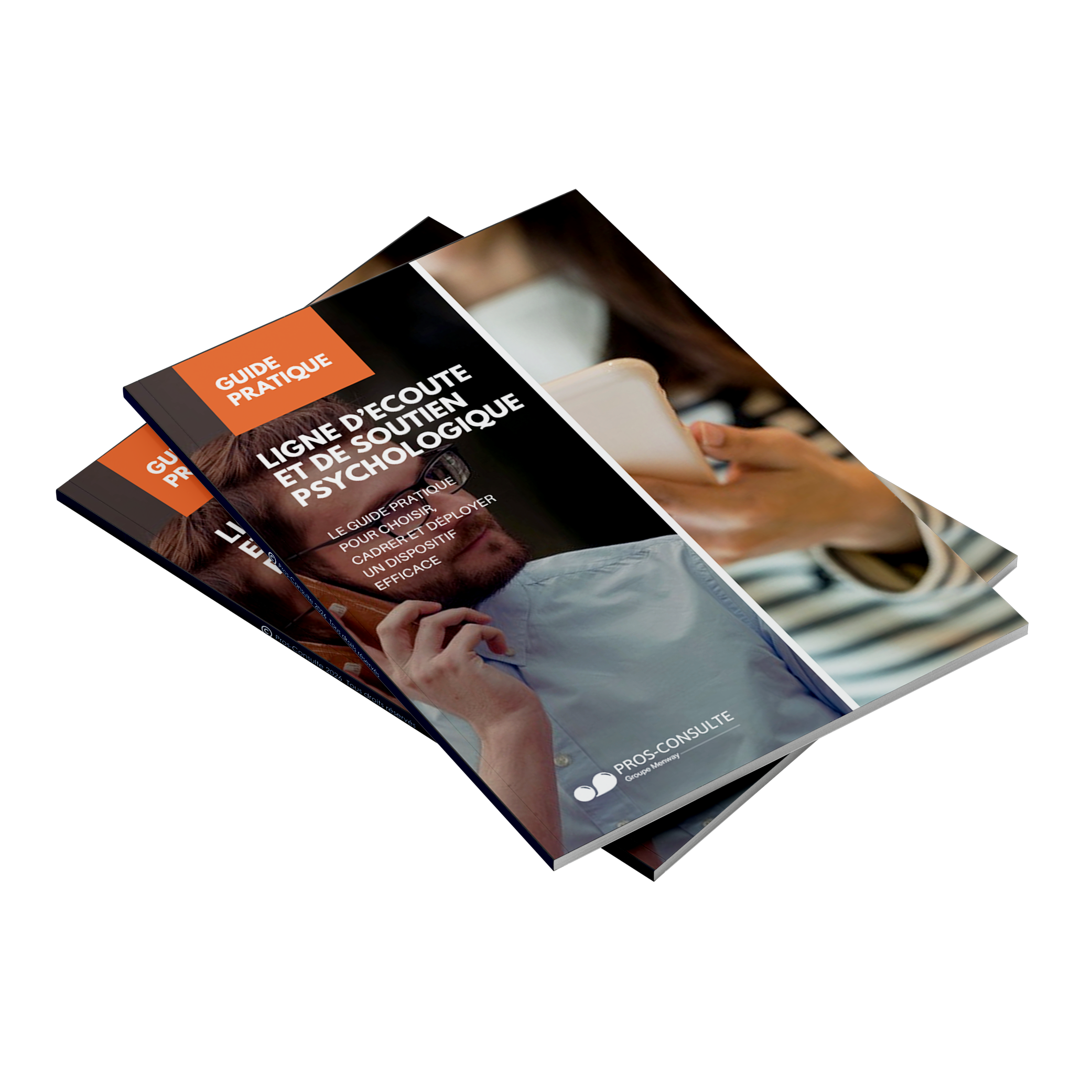
A dedicated resource to help you better understand the challenges of providing support in the aftermath of a serious incident at work, identify key considerations, and develop a more structured HR response.
A practical guide for HR directors, HR managers, managers, and executives.

This is one of the real blind spots in many organizations: as long as a serious incident hasn’t occurred, the issue seems secondary. Then, when it does happen, everything becomes urgent.
HR must make quick decisions. Managers must fulfill their roles even though they are personally affected. Teams are waiting for clear signals. And the company discovers, sometimes abruptly, that it lacks the necessary framework to handle the situation properly.
This reactive management often leads to three negative effects:
- it increases the burden on HR and managers
- it allows delayed impacts to take hold without being properly identified
- it undermines the recovery and the work collective.
A corporate psychological support team is not intended to sensationalize situations. On the contrary, it enables them to be addressed methodically, with discernment, and responsibly.
Support following a serious incident requires specific expertise. It is not simply a matter of listening. It requires the ability to intervene in highly emotionally charged situations, adapt the approach based on the nature of the incident, identify vulnerabilities, support teams, and ensure the company’s role in managing the situation.
Our services are provided by experienced psychologists trained to support sensitive situations in the workplace and to conduct interventions tailored to contexts of crisis, shock, or collective destabilization.
Depending on the situation, support may take the form of individual, group, or blended support, always guided by the principles of appropriateness, confidentiality, and adaptation to the organization’s context.

Learn about our approach, our positioning, and the expertise we bring to bear in providing long-term support for sensitive human situations in the workplace.
15 years of experience – 150 expert psychologists and social workers – A multidisciplinary approach
.webp)

Not all situations require the same level of response. In some cases, an on-site psychological support team is the most appropriate solution. In others, remote support or a dedicated helpline can ensure rapid and accessible assistance.
The goal is not to pit these options against one another, but to develop the most appropriate response based on:
- the type of event
- the level of employee exposure
- the dispersion of teams
- the need for immediate or long-term support
- the level of involvement expected from HR and management
This approach allows the company to avoid overreacting, while also ensuring that a serious situation is not handled in a way that is insensitive to human needs.
Restructuring, job retention plans, and ongoing labor disputes: these situations require specialized support that goes beyond what a post-incident counseling team can provide.
Team support – Confidential discussions – Tailored to your specific situation